Interior Design Trends 2026: What Is Changing
In 2026, interior design is moving beyond decoration toward daily comfort, healthier air, natural materials, flexible layouts and technology that blends quietly into the home.
Interior design trends 2026 show a clear shift toward homes that feel calmer, healthier and easier to use every day. The focus is no longer only on how a room looks, but on how it supports comfort, routines and long-term livability.
Below, you will find what is changing in colors, materials, lighting, technology and layout planning. You will also see which ideas have real staying power and which ones are more likely to remain short-term visual statements.
Why interior design is changing in 2026
The main logic behind 2026 interiors is better everyday well-being. The U.S. EPA notes that indoor air quality is affected by building materials, finishes, ventilation, moisture and household products, which is one reason design is becoming more closely linked to health, not only decoration.
Energy performance is another driver. According to the IEA, the residential sector represents a large share of total energy demand in buildings, so current home design increasingly brings together thermal comfort, efficient equipment and smarter planning.
At the same time, overly stark interiors are losing ground. In its 2026 trend coverage, Houzz points to strong demand for green tones, layered lighting, natural materials and wellness-oriented spaces.
Which colors and moods are leading in 2026
Warm neutrals and natural greens
White is not disappearing, but it is giving way to softer, warmer versions. Sand, flax, clay, warm gray and muted greens are more aligned with the 2026 mood. Houzz specifically highlights demand for sage, olive, forest and deep green tones in cabinetry, tile, upholstery and stone.
Layering instead of hard contrast
Where high black-and-white contrast once defined a modern interior, 2026 leans toward tonal layering. Using several shades within one palette makes a room feel calmer and less visually tiring, especially in homes used for work, rest and social life at the same time.
- Living rooms, warm neutrals with green or clay accents.
- Kitchens, painted cabinetry balanced with wood texture.
- Bedrooms, more matte finishes and fewer reflective surfaces.
Which materials are moving to the forefront
The defining material themes of 2026 are tactility and material honesty. Houzz reports that natural materials remain a strong favorite, especially wood. In parallel, the IEA emphasizes the growing importance of material efficiency, circularity and low-emission practices across the building life cycle.
In practical terms, that means wood, stone, ceramic, matte metals and textured natural-looking textiles continue to gain relevance. Synthetic finishes are not disappearing, but they are more often chosen when they deliver durability while still looking grounded and tactile.
| Material | Why it fits 2026 | Where it works best |
|---|---|---|
| Natural wood | Warms the room, adds depth and tends to age with character | Cabinetry, wall panels, furniture |
| Stone and stone-look surfaces | Feel solid, calm and easy to pair with other finishes | Kitchens, bathrooms, feature surfaces |
| Ceramic | Durable and increasingly varied in color, scale and texture | Bathrooms, kitchens, flooring |
| Matte metal | Creates a more settled look than highly reflective finishes | Handles, lighting, plumbing fixtures |
| Textured fabrics | Improve softness, acoustics and visual comfort | Curtains, lounge seating, bedding |
Why healthy interiors have become a major trend
One of the strongest shifts in 2026 is the rise of the healthy home. This includes better air quality, moisture control, low-emission materials and easier-to-clean surfaces. The EPA recommends controlling pollution sources, ensuring adequate ventilation, using supplemental air cleaning and filtration when needed, and keeping indoor humidity below 60%, ideally between 30% and 50%.
The EPA also explains that uncontrolled moisture can support mold and other biological contaminants, so material choices and ventilation strategies matter most in bathrooms, kitchens and laundry areas.
What this means in practice
- Choose low-emission paints, sealants and finish materials.
- Plan for reliable natural or mechanical ventilation.
- Use moisture-tolerant materials in wet areas.
- Reduce unnecessary dust-catching decor if easy maintenance matters.
This approach is especially important during renovation. The EPA advises minimizing pollution from both new products and disturbed existing materials, while using low-emitting products and mechanical ventilation where possible.
How lighting is changing
A single ceiling fixture is increasingly seen as insufficient. In 2026, layered lighting is the preferred approach, combining ambient, task and mood lighting in the same room. Houzz explicitly identifies mood-enhancing lighting as part of the shift toward more calming interiors.
This creates a more flexible home. During the day, natural light and task lighting can lead, while evenings rely on wall lights, cabinet lighting, dimmers and softer scenes. In the 2026 Houzz Kitchen Trends Study, LED bulbs and dimmers are among the sustainability-related choices homeowners are making.
Smart homes in 2026, from visible tech to invisible comfort
Technology remains central, but its aesthetic role is changing. Instead of acting as a showpiece, smart systems are increasingly expected to disappear into the background, through climate control, lighting scenes, motorized window treatments, built-in charging and better cable concealment.
Efficient heating and cooling are part of this shift. ENERGY STAR explains that a certified air-source heat pump provides efficient heating and cooling in one system. As a result, interior planning now more often treats mechanical systems as part of comfort design rather than a separate technical layer.
Ventilation is becoming more important too. ANSI/ASHRAE Standard 62.2-2025 addresses residential ventilation and acceptable indoor air quality, reinforcing the idea that comfort and health depend on planning systems as carefully as finishes.
Where kitchens and bathrooms are heading
Kitchens, quieter visually, stronger functionally
The 2026 kitchen is moving toward a calmer appearance. According to the 2026 Houzz Kitchen Trends Study, many homeowners are choosing LED lighting, energy-efficient appliances, timeless design, dimmers and VOC-free or low-emission finishes. The message is clear, people want style, but they also want durability and easy daily use.
Visually, there is stronger interest in unified surfaces, better-organized storage and solutions that reduce visual noise on worktops. That is why integrated appliances and concealed functional zones continue to feel current.
Bathrooms as wellness rooms
The 2026 Houzz bathroom coverage highlights low-curb showers, soaking tubs, custom vanities, bidet toilet seats and sustainable choices. That points to a bathroom that is no longer treated only as a technical space.
Practical performance still matters most. In wet zones, the right finish is not only attractive, it should also tolerate moisture, clean easily and work with good air exchange.
How forms, furniture and layout are evolving
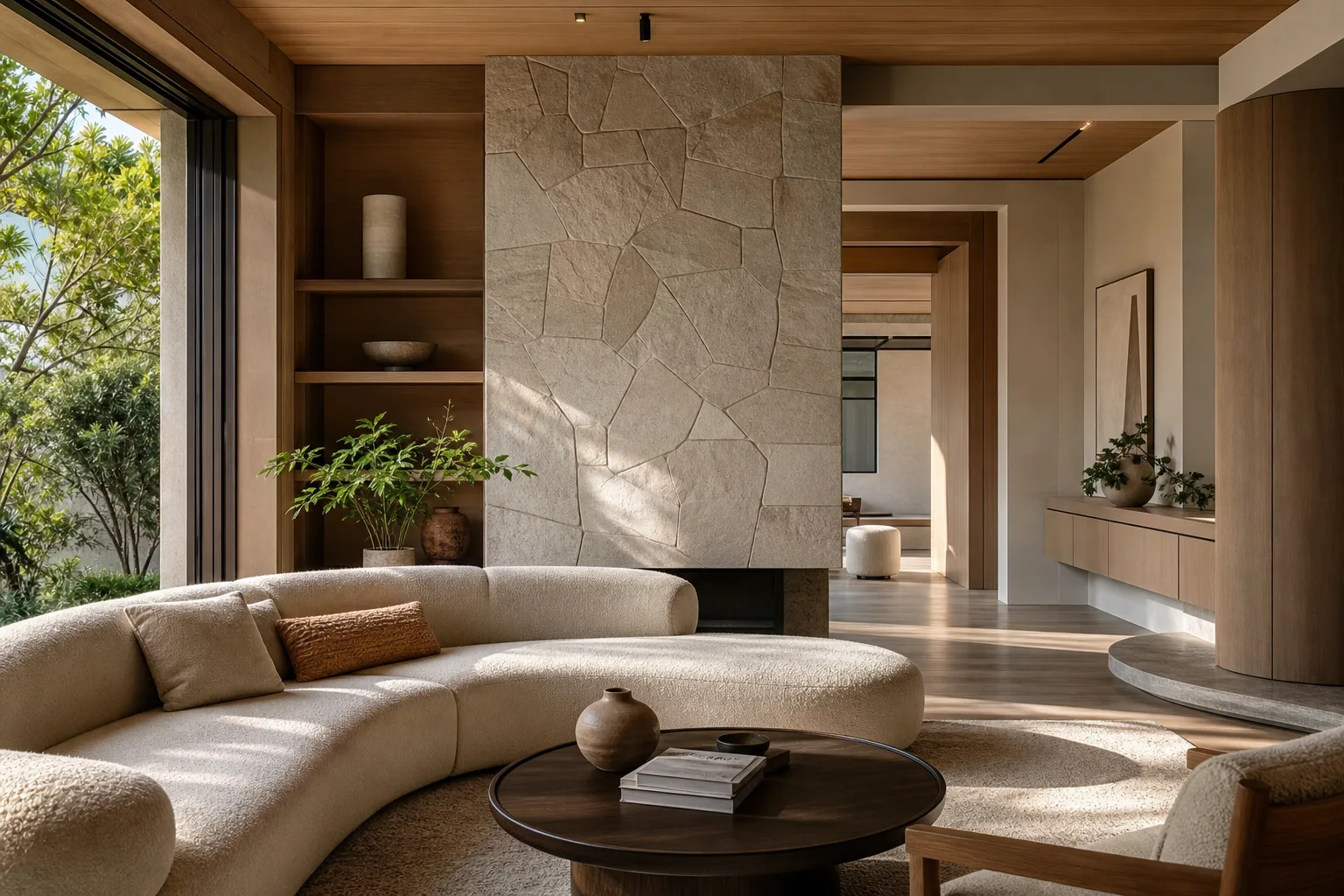
In 2026, furniture and architectural details are becoming softer in profile. Rounded corners, oval tables, curved sofas and gentler geometry help a home feel more relaxed. This works especially well when the room already includes stricter textures such as stone, wood or ceramic.
Another major shift is multifunctionality. Homes are expected to support rest, work, hosting and storage at once, so hidden storage, modular furniture and flexible zoning are increasingly valuable. For more visual examples, see our projects and browse related ideas on the blog.
Which trends are most likely to last
Not every popular look has the same long-term value. The 2026 trends with the strongest staying power are the ones that combine aesthetics with everyday function.
- Natural and durable materials, because they tend to age better and fall out of fashion more slowly.
- Well-planned lighting scenes, because they directly improve how a room is used.
- Low-emission and moisture-aware choices, because they affect health and maintenance.
- Flexible storage, because it keeps rooms visually calm.
- Invisible technology, because it raises comfort without cluttering the interior.
Practical checklist for updating a home in line with 2026 trends
- Limit the core palette to 3 or 4 colors and build depth through tonal layers.
- Balance at least one cool surface with a warm texture such as wood or fabric.
- Plan at least three types of lighting, ambient, task and mood.
- Review ventilation and moisture-resistant materials in wet areas.
- Choose low-emission paints and finish products.
- Define concealed storage early so surfaces stay visually clear.
- Add smart features where they genuinely improve comfort, such as lighting or climate control.
- If you are renovating, start by listing how each room needs to function, then choose the style. For broader context, you can also review our services page.
Conclusion
Interior design in 2026 is making the home more human, more calming and more intelligently planned. The biggest changes are not only about color or shape, but about how health, energy awareness, ease of maintenance and visual comfort work together.
If there is one idea that defines the year, it is this: the most relevant interior in 2026 is the one that looks current while genuinely improving daily life.
Frequently asked questions
What is the biggest interior design trend in 2026?
The clearest direction is the wellness-oriented home, where natural materials, layered lighting, better ventilation and calmer colors work together. The emphasis is on spaces that feel good to live in, not only good to photograph.
Which colors are trending in interiors for 2026?
Warm neutrals, earthy tones and muted greens are especially relevant. Houzz trend coverage for 2026 points in particular to sage, olive, forest and deep green tones.
Are smart homes still on trend in 2026?
Yes, but in a less visible way. In 2026, smart features are more often integrated into lighting, climate control, storage and daily routines so that the technology supports comfort without dominating the look of the room.
How can I make an interior healthier during renovation?
The EPA recommends controlling pollution sources, improving ventilation, managing moisture and choosing low-emission materials. This matters especially when selecting paints, finishes, adhesives and materials for bathrooms, kitchens and other moisture-prone spaces.
Is minimalism disappearing in 2026?
No, but it is changing character. Instead of cold and severe minimalism, 2026 favors a warmer, more tactile and more human-centered version that keeps spaces uncluttered without making them feel sterile.
Sources
- 25 Home Design Trends Defining How We’ll Live in 2026
- 2025 U.S. Houzz Emerging Summer Trends Report
- 2026 U.S. Houzz Kitchen Trends Study
- The Bathroom Features Homeowners Want Most in 2026
- Buildings, Energy Efficiency 2025, IEA
- Building, Breakthrough Agenda Report 2025, IEA
- Indoor Air Quality, U.S. EPA
- What can I do to improve indoor air quality in my home?, U.S. EPA
- Biological Contaminants and Indoor Air Quality, U.S. EPA
- Addressing Indoor Environmental Concerns During Remodeling, U.S. EPA
- ANSI/ASHRAE Standard 62.2-2025
- Air-Source Heat Pumps, ENERGY STAR