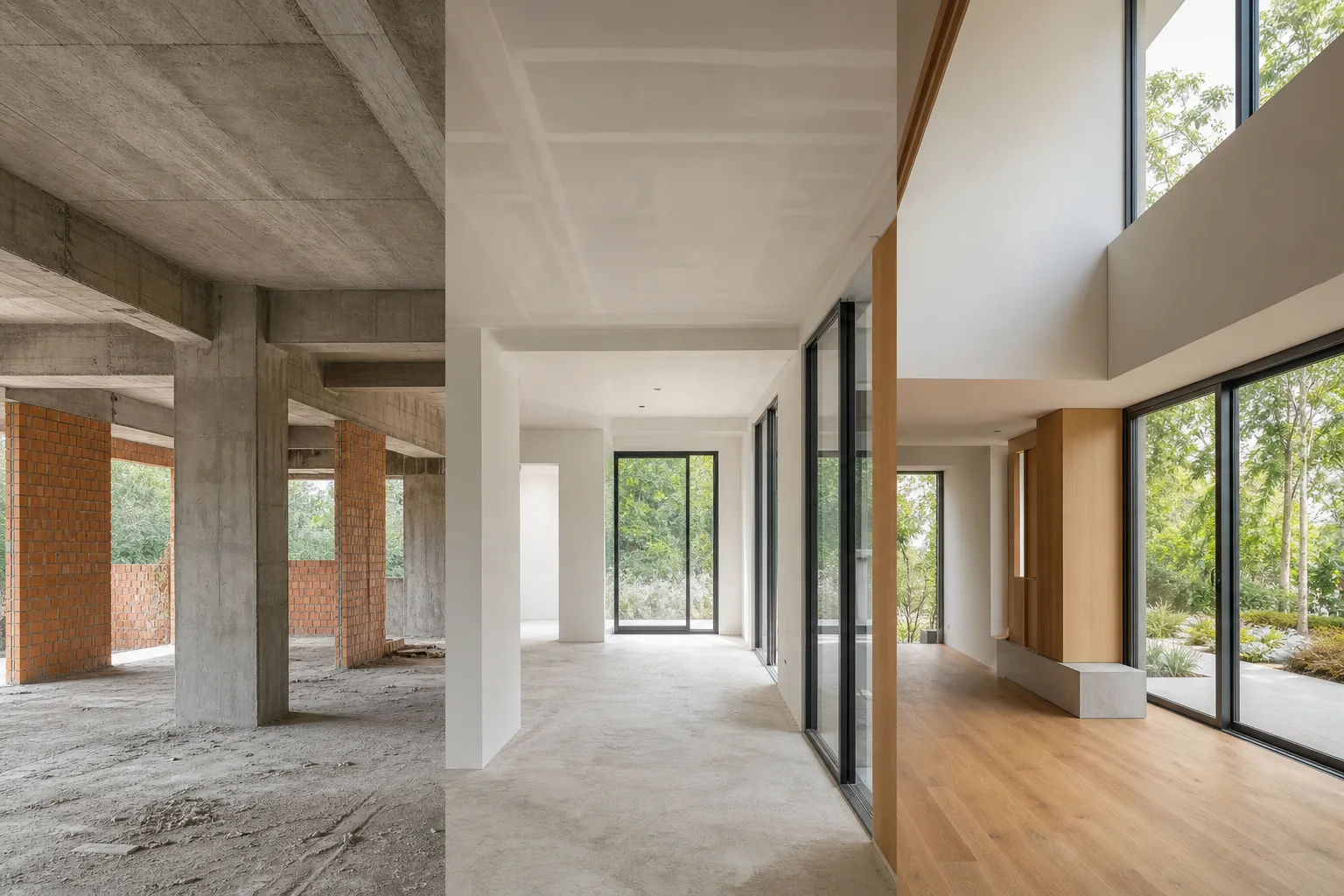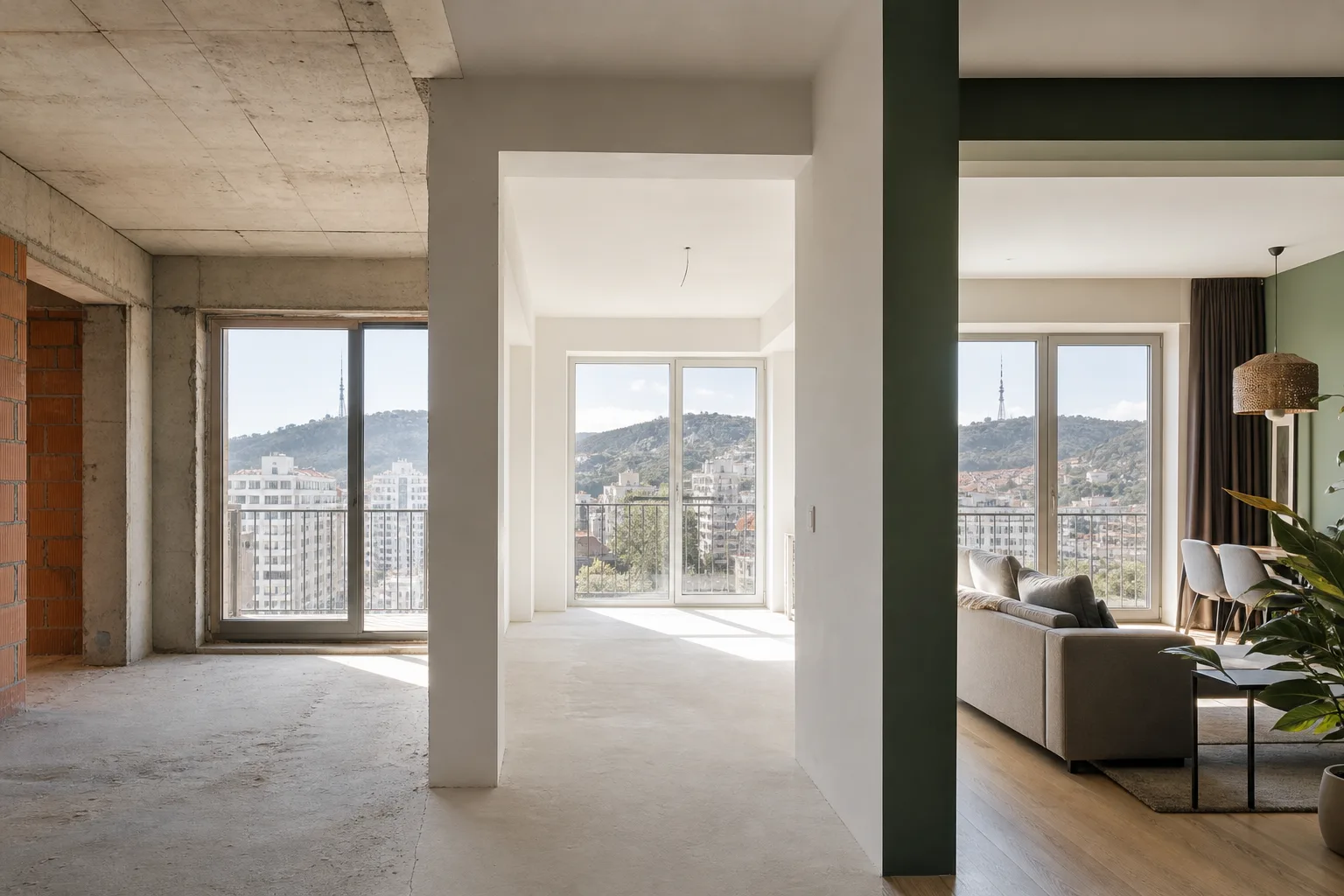
Black, White, Green Frame
In new residential buildings, black, white and green frame do not always mean the same specification. The smart way to compare apartments is to look past the label and read the handover scope, engineering setup and finish quality.
Black, white and green frame are some of the most common labels used for new apartments, yet they often confuse buyers for one simple reason, the same words do not always describe the same handover scope. In practice, these are market terms, not a single strict technical standard applied the same way everywhere.
This guide explains what each frame level usually means, what is commonly included, where misunderstandings happen, how to compare listings properly and why the label alone should never drive the decision. For broader context on planning and renovation topics, the blog is a useful starting point.
What black, white and green frame mean
In Georgia, these terms are widely used to describe completion levels in the primary housing market. Their relevance as real market categories is also visible in the methodology of the National Statistics Office of Georgia, which distinguishes apartments by green, white and black frame in its residential real estate index materials.
That said, the statistical use of the categories does not replace the main rule for buyers: the exact handover scope must be written in the contract and specification. If a document mentions only the frame type without a detailed list, the buyer is left with room for interpretation.
Black frame
Black frame usually means the structural shell of the apartment, the enclosing elements, sometimes part of the internal partitions, windows and the entrance door, but very little interior preparation beyond that. In many cases, the apartment still needs engineering installations, leveling of surfaces and nearly all finishing works.
White frame
White frame is typically a step forward from black frame because some of the rough interior works have already been done. This often includes plastered walls, floor screed, some service routes or connection points, while final finishes, sanitary fixtures, light fittings, internal doors and decorative layers are still unfinished.
Green frame
Green frame is the least standardized category. In practice it often means a stage beyond white frame, where part of the finishing package has already been completed, such as paint, flooring, tiles or sometimes basic bathroom fixtures. This is also the category where the biggest differences between projects tend to appear.
Why there is no single universal definition
These labels work mainly as market language. That is why one developer's white frame can differ sharply from another's, for example, one apartment may include full electrical rough-in, while another may offer little more than a supply point brought to the unit.
Because of that, comparisons should be made not by title alone, but by asking the right questions:
- Are internal partitions built, and with what material?
- Are the walls plastered, and to what level of flatness?
- Is the floor screed complete?
- How far are water, drainage, heating and electrical services brought?
- What exactly is included in bathrooms and wet areas?
- What type and quality of windows and entrance door are handed over?
If you want to think through layout and fit-out options as well, the services page gives useful neutral context on space planning questions.
What is usually included, comparison table
| Category | What is often included | What is often missing | Main risk |
|---|---|---|---|
| Black frame | Structural shell, enclosing walls, windows, entrance door, sometimes some partitions | Plaster, screed, full electrical works, plumbing, finishes, internal doors | Underestimating the full amount of work still required |
| White frame | Plastered walls, floor screed, part of the engineering setup, sometimes partitions | Decorative finishes, fixtures, light fittings, furniture | The quality of rough works may be hidden under prepared surfaces |
| Green frame | White frame basics plus some finished elements, such as tile, paint, flooring | The package varies widely, full fit-out is often not included | The name can create the impression of a ready home when important items are still missing |
Which frame level suits which buyer
When black frame makes sense
Black frame is often best for buyers who want to shape the plan from the start, are ready for deeper interior customization and want direct control over hidden works as well as finishes. It demands more decisions, but also gives more freedom.
When white frame works well
White frame is often the most practical option when you want to avoid the heaviest early-stage works but still keep control over the finish materials and technical solutions. Here, the quality of the base matters greatly, because poor plaster or screed can lead to extra rework later.
When green frame may suit you
Green frame can be convenient for buyers who want less self-managed coordination. But it also needs the closest reading of the specification, what materials were used, where waterproofing was applied, how wet areas were completed and whether the items shown in visuals are actually part of the handover.
What to check before purchase and at handover
At handover, your main tool should be a checklist, not a first impression. Since there is no single mandatory legal description for these frame levels, the contract and technical annex become the key benchmark.
Practical checklist
- Compare the apartment to the written specification, line by line.
- Check wall and floor flatness, corners and visible cracking.
- Test window sealing, operation and alignment.
- Confirm service points for electricity, water, drainage, heating and ventilation.
- Ask where and how waterproofing was applied in wet areas.
- Look for moisture marks, mold, salt deposits or leak traces.
- Request short technical information on systems and materials where this is implied by the contract.
If you want visual examples of completed residential spaces for context, you can browse the projects page, although any real handover assessment should still be done on site.
Why moisture, ventilation and hidden works matter so much
According to the World Health Organization, persistent dampness and mold in housing are linked with a higher risk of respiratory symptoms, allergies and asthma exacerbation. WHO also stresses that mold always signals inadequate building features or poor moisture control.
That is why choosing a frame level should never focus only on how finished the apartment looks. In some cases, the more visually complete handover is actually less transparent, because pipes, cabling, waterproofing and base preparation are already covered. Recent European policy guidance also puts growing emphasis on indoor environmental quality, alongside energy performance, including ventilation, temperature and indoor air quality.
What shapes the choice
The right choice depends not only on the frame label, but on what is truly included in the handover. Within the same category, differences in building quality, engineering systems, window performance, entrance doors, common areas and real depth of completion all affect how an apartment should be judged.
When comparing options, focus on these factors rather than the headline alone:
- How much hidden work still needs to be done later,
- How easily the existing plan can be changed,
- Whether any completed work may need to be removed and redone,
- How clearly the handover scope is written,
- How good the building envelope, windows and moisture-control logic appear to be.
Most common mistakes buyers make
The first mistake is assuming that white frame always means a half-ready apartment in a predictable sense. In reality, some projects offer a genuinely well-prepared base, while others rely more on the label than on the technical content behind it.
The second mistake is treating green frame as the same thing as a move-in ready home. Unless the package is described in detail, internal doors, fixtures, enough electrical points or important bathroom elements may still be missing.
The third mistake is looking only at décor instead of building physics. Moisture, condensation risk, weak ventilation and poor openings often have a much bigger effect on everyday living than the color of the walls.
Conclusion
Black, white and green frame are useful orientation points, but they are not enough for a final decision on their own. The safest approach is to unpack each offer to a technical level, read the specification carefully and pay close attention to hidden works at handover.
If the whole guide had to be reduced to one sentence, it would be this: do not buy the label, buy the clearly described scope and quality behind it.
Frequently asked questions
Are black, white and green frame officially defined the same way?
No. These are widely used market categories, but their practical meaning often depends on the developer's own specification. That is why the technical annex and contract wording matter more than the label itself.
Which is the safest choice, black, white or green frame?
There is no universal best answer. Black frame can suit buyers who want full control, white frame often gives the best balance between readiness and customization, and green frame needs the closest verification because the finish scope can vary a lot.
Why is white frame so popular?
Because it often removes the heaviest early-stage works while still allowing the owner to choose finishes and many technical details. Its real quality depends on how well the plaster, screed and engineering base were executed.
What matters most at handover?
The most important step is comparing the actual apartment with the written specification. Technically, the critical items are moisture signs, cracking, window sealing, service points, waterproofing logic and the flatness of walls and floors.
Does green frame mean the apartment is ready to live in?
Not always. In some projects it means a relatively advanced finish level, while in others it means only a partly finished apartment. Always check the exact list of inclusions and exclusions.